
Empowerment is a beautiful thing.
It's the rallying cry that reminds you that you can do it! You’re capable of doing amazing things! It's what keeps you on track when you're at your wit's end. But sometimes, empowerment takes a wrong turn.
Sometimes it becomes a mask. Other times, it is something we say to fill space when we don’t know how to hold another’s pain. That’s where it slips quietly into the treacherous terrain of toxic positivism.
Trust me, you’ve likely heard it before:
“Everything happens for a reason.”
“Just think positive thoughts!”
“It could be worse.”
“Good vibes only.”
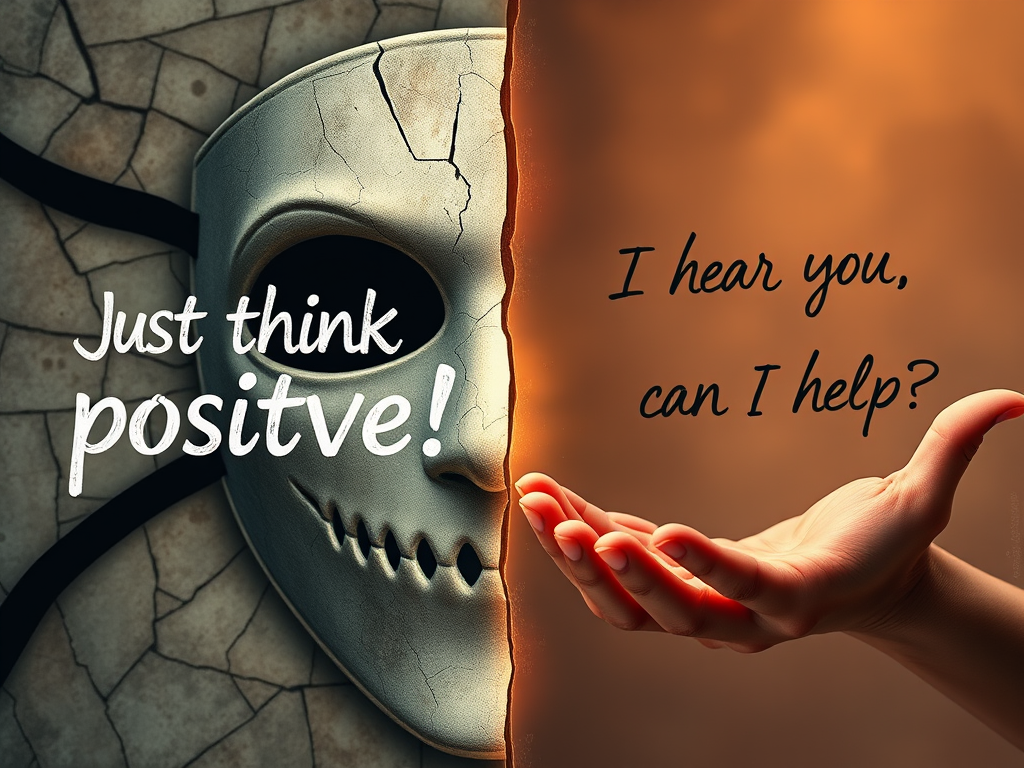
It sounds harmless, comforting, even. But when you’re in a low place, those words don’t lift you up. They leave you feeling unseen.
A 2022 Mental Health Foundation report revealed an important statistic. Nearly 74% of adults in the UK felt so stressed at some point in the past year. They felt overwhelmed or unable to cope. Imagine reaching out during that time, only to be told to “just think happy thoughts.” That doesn’t help. It isolates.
Research from the Canadian Mental Health Association highlights that adolescents often feel pressure to appear "okay" online and in school. This leads to increased anxiety, with 64% of teens saying they often feel they can’t show their true emotions without being seen as weak.
So where’s the line between empowerment and dismissiveness? Let’s find it together.
Empowerment Uplifts; Toxic Positivism Dismisses
Empathy is the key to empowerment. In a way, it meets people where they are, offering encouragement and acknowledging their struggles. Toxic positivism, on the other hand, skips the acknowledgment part entirely.
Think about this: A friend tells you they’re overwhelmed by rising bills and a job they’re afraid of losing. True empowerment sounds like:
“That’s a lot to carry. I believe in your ability to get through it, but I’m here if you need support.”
Toxic positivism, however, might look like:
“Don’t worry! Just be positive. Things will work out.”
See the difference? One meets them where they are. The other skips past the pain to get to a resolution that may not even be real.
I remember once telling someone close to me that I felt burnt out—mentally drained, creatively numb. They replied with, “At least you have work. Just be grateful.” I know they meant well, but in that moment, I felt brushed aside. What I needed was space to be human, not guilt for feeling human.
The Quiet Harm of “Good Vibes Only”
Positivism isn’t bad, but the idea that only positivism is allowed is dangerous.
Toxic positivism creates shame around anything less than joyous. It says there’s no room for sadness, confusion, fear, or even rest. But we’re layered. Life isn’t all light. It has shadow too.
Suppressing our real emotions doesn’t make them go away; it just delays them. They sit, quietly growing roots, until they show up later as anxiety, burnout, or emotional withdrawal.
We don’t grow by denying our struggles. We grow by acknowledging them, sitting with them, and slowly finding our way through.
How to Truly Empower Someone (Including Yourself)
So, how do we find the balance? How do we encourage growth, resilience, and optimism without dismissing the reality of life’s challenges? Here are a few ways:
- Validate First, Empower Second
Start by acknowledging the struggle. Validation doesn’t mean agreeing with negativity. It simply means saying, I see you, and I understand that this is hard. People need to feel seen before they can feel strong. - Offer Presence, Not Platitudes
Sometimes the most empowering thing you can do is just listen. Not everything needs a silver lining. Sometimes people just need space to feel. - Encourage Realistic Progress
Empowerment isn’t about pushing people to fix everything overnight. It’s about encouraging small, manageable steps forward. Remind yourself: One slow breath is still movement. - Be Vulnerable Too
Sharing your own challenges can be incredibly empowering for others. If you’ve been there, say so. It shows that they’re not alone and that it’s okay to struggle while hoping for better.
A Moment for Reflection
Life is hard. It’s messy, unpredictable, and sometimes downright exhausting. But it’s also full of beauty, growth, and moments of joy. True empowerment lives in that balance. It’s not in pretending everything is fine; it’s in finding strength and hope even when things aren’t.
We don’t need to pretend everything’s okay to find strength or slap a smile on pain to be brave. We just need to hold space for ourselves, for others, and for all the messy, meaningful in-betweens.
Ask yourself:
- When someone shares something hard, do I listen, or do I try to fix it?
- Have I ever used positivism as a way to avoid discomfort, my own or someone else's?
- What words have truly empowered me when I was struggling?
Let’s Talk
Have you ever experienced toxic positivism on the giving or receiving end?
What words helped you when you were struggling?
I'd love to hear your thoughts in the comments or in a reply.
Let’s keep the conversation real, gentle, and open.