
The Illusion of “Fine” in Comfortable Complacency
There’s a strange kind of comfort in telling yourself, “I’m fine.”
It’s a familiar kind of safety that often masquerades as contentment, but when we look past the surface, it feels like quiet restlessness. You go through the motions, stick to the same routines, stay in the same relationships or roles. Most of the time, it's not because they’re deeply fulfilling. We stay with them because they are familiar, predictable, and so very easy.
This is what we mean when we talk about comfortable complacency. That place where you're not necessarily unhappy, but you’re no longer growing either. You’re rooted in routine, assuaged by the absence of change, but somewhat depressed by the lack of progress.
Now, there is a difference between the comfort zone, complacency zone, and comfortable complacency. These terms are typically used interchangeably, but they have distinct meanings. Some may disagree, but that's okay. I wrote a post about the Comfort and Complacency Zones on Silent Things; check it out to understand my viewpoint.
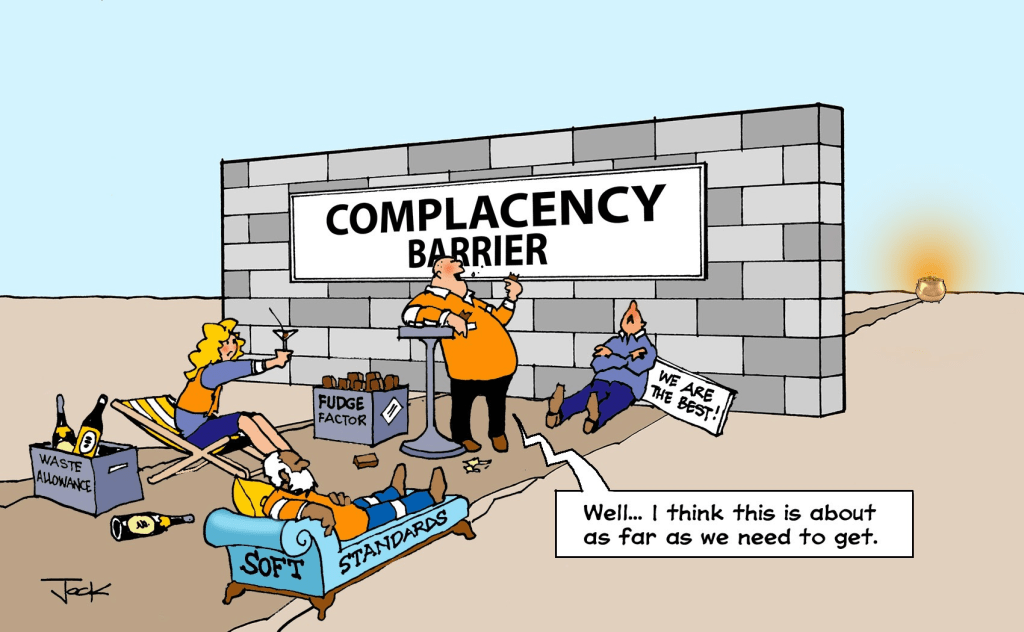
At first, we think nothing of it. We never consider it to be a problem. After all, what’s wrong with comfort? Isn’t that what we all crave; a life that is settled and stable?
Not all comfort is the same; some comfort is just fear hiding.
This post discusses how we often choose comfort over growth and how to recognize when being "comfortable" is hindering our progress.
Where Comfortable Complacency Hides
Comfortable complacency typically masquerades as contentment, but it’s a deceptive façade. It presents itself in the guise of stability, structure, or even success, lulling us into a false sense of security. This state of being "fine" where we're neither truly happy nor entirely miserable can encourage us to drift aimlessly through life, disconnected from the fiery spark of our true purpose.
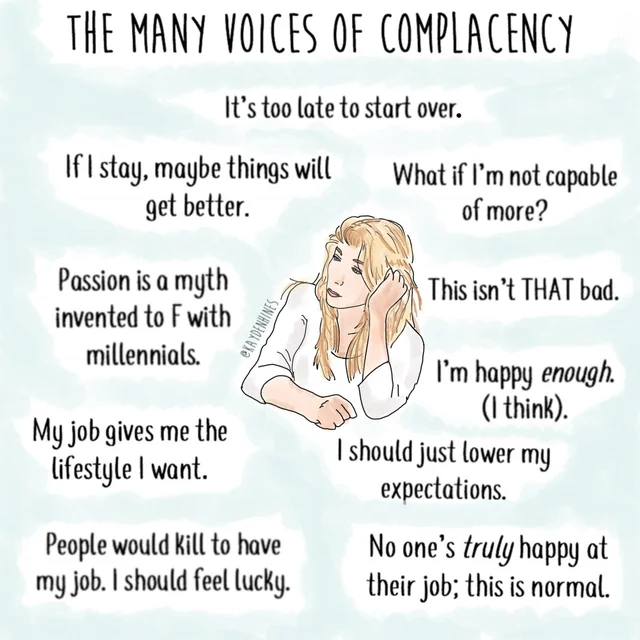
The tricky thing about complacency is that it sneaks up on you like a cat on a lazy Sunday afternoon. It slinks into your life, cosying up to your daily habits until you can’t tell them apart. I think it's like trying to spot the difference between a boring routine and a particularly thrilling episode of watching paint dry. And because it doesn’t punch you in the face, it’s all too easy to shrug it off like, "Hey, who doesn’t love a little boredom?" you might say while embracing your couch potato identity!
Comfortable Complacency in Relationships
You might think you're not arguing, and on the outside, everything looks fine and dandy. But deep down, there's a void; you know the spark has vanished. You're not truly seen or emotionally satisfied. Conversations have become mundane, the connection dwindles, but you cling to this stale routine. Why? Because it’s what you know, and the idea of starting fresh terrifies you. Admitting things have changed would mean confronting an uncomfortable truth, and let's face it, change, even if it promises something better, isn't exactly a walk in the park.
So you convince yourself it’s just a phase, or that all relationships lose their excitement over time. You stay quiet. You settle. And slowly, you start to believe that “fine” is good enough.
In Careers
At one point, your job challenged you. It propelled you to grow, to think outside the box, to push beyond your limits. But now, it feels like a routine you could execute with your eyes closed. The days meld into one another. The tasks have lost their lustre. You’re not in despair, but your soul yearns for more. Yet, you remain.
Maybe it’s the steady pay cheque, the security, the fear of change, and all of these are understandable reasons. But if your work no longer excites or inspires you, if it feels like you’re just clocking in and out of your own potential, that’s complacency not contentment.
In Routines and Daily Life
We all find comfort in routine. But there’s a difference between stability and stagnation. Sometimes, we fall into the same rhythms day after day. We wake up, go to work, scroll through our phones, go to bed, without ever questioning if these routines are supporting the life we want to live.
If every day starts to feel the same, not because of peace but because of autopilot, it may be time to check in with yourself. Are your habits serving you? Or have they become hiding places?
In Self-Perception
Perhaps the most deceptive place complacency hides is within your own sense of identity. You might say things like, “I’m just not creative,” or “I could never do that,” without ever questioning where those beliefs came from. Were they planted by someone else? Were they formed in a moment of fear or failure?
We often underestimate how much of our potential we leave untouched, simply because we believe old stories about who we are, or who we’re not. These narratives, often formed from experiences or the expectations of people around us, can create a powerful grip on our self-perception. They shape our decisions and limit our aspirations, and end up pushing us towards a comfortable but unfulfilling existence.
Complacency thrives in those unchallenged narratives, and make us settle into routines that prevent growth and experimentation. It takes courage to confront these internalized perceptions, to question their validity, and to rewrite them in a way that aligns with our true potential, yet doing so can unlock a world of opportunities that we never thought possible.
Why We Stay
If complacency is so unfulfilling, why do we stay there? Why do we hold on to lives, careers, relationships, and habits that no longer reflect who we are, or who we hope to become?
The answer is simple: staying still feels safer than moving forward. Comfort, even when it's limiting, gives us a perception of certainty, which we crave. The thought of leaving behind the familiar, even if it's not working, can feel more frightening than sticking with it.
One of the most common reasons we stay stuck is fear. And that fear could mean many things. Fear of failure, fear of judgment, fear of not being good enough. The unknown is terrifying and intimidating. Stepping into something new, especially when we’re unsure of the outcome, can trigger deep-seated anxieties.
What if it doesn’t work? What if I’m worse off than I am now? What if people don’t understand?
These questions keep us anchored to the familiar, even when the familiar has stopped serving us.
Another reason we stay is exhaustion. Change requires effort, sometimes more than we feel we have to give. After all, life already asks so much of us. Between responsibilities at work, obligations at home, and the emotional struggles of simply being human in today’s world, the thought of adding another challenge to the list can feel overwhelming.
So, instead of initiating change, we tell ourselves that “things aren’t that bad.” We rationalize our unhappiness. We convince ourselves that we should be grateful, that wanting more is a small act of betrayal to the life we already have.
There’s also the influence of culture and social conditioning. We live in a world that often celebrates predictability and rewards routine. Stability is seen as success. Any deviation from the path, especially one that looks “secure”, can be treated as reckless or irresponsible. And so, we internalize the message: don’t rock the boat. Don’t take the leap. Just keep going, even if the path feels hollow.
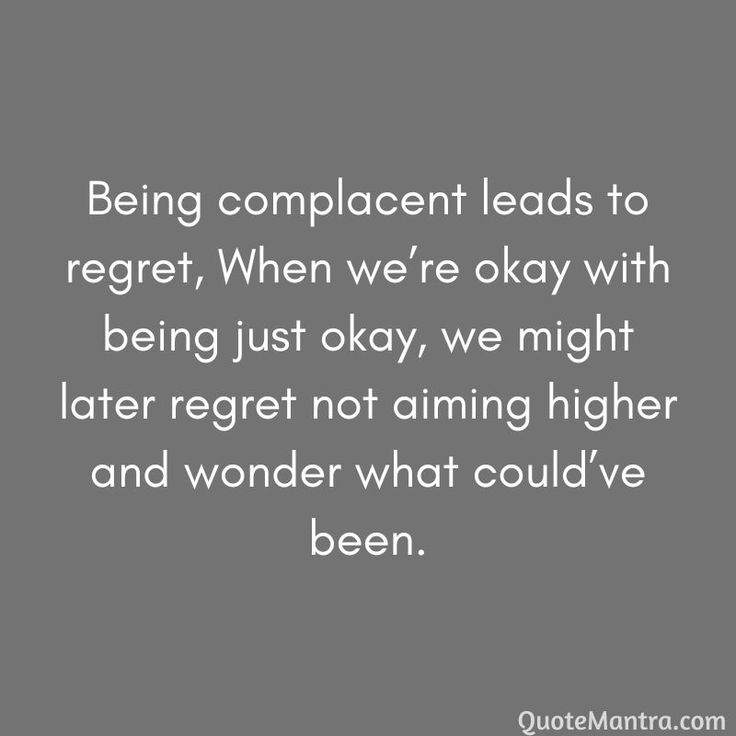
But there’s a cost to staying in places we’ve outgrown. We start to lose touch with our passions. Our sense of wonder fades. We begin to wonder if this, the “fine,” the “okay,” the just-good-enough, is really all there is.
And when those questions start to pop up, it’s the beginning of our awakening. It’s your inner self gently nudging you toward change.
Where We Go From Here
Comfortable complacency isn’t something we fall into because we’re lazy or ungrateful. More often, it’s the natural response to a world that feels uncertain and overwhelming. But just because it feels safe doesn’t mean it’s where we’re meant to stay.
Sometimes, the quiet discomfort inside you is a sign that it’s time for a change. You're ready for more.
The invitation isn’t to burn it all down. It’s to pause, reflect, and ask yourself honest questions about whether your life still aligns with your aspirations. If it doesn’t, you’re allowed to pivot.
And if this post awakens something in you, if you're sitting with questions, restlessness, or even resistance, I’ve recorded a companion episode of my podcast, TIMV (This Is My Voice), to go even further into this very topic of Comfortable Complacency.
We’ll talk about the fear of change, the guilt that sometimes comes with wanting more, and the slow, powerful journey back to a life that doesn’t just feel comfortable, but meaningful.
🎙️ Listen to the episode: "Comfortable Complacency — When Settling Stops Serving You"
(Available wherever you get your podcasts.)